

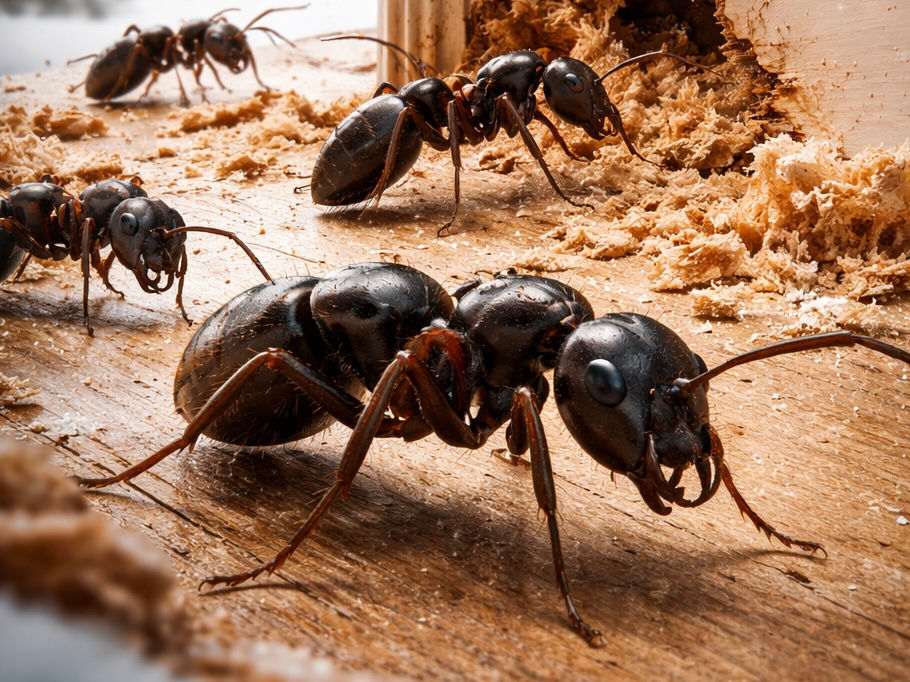
Carpenter Ants in Winter: Why Do They Appear in Your Home?
- ML EXTERMINATION

- Mar 5
- 2 min read
Carpenter Ants in Winter: Why Do They Appear in Your Home?
Many people believe that insects completely disappear during the winter. However, it is quite common for homeowners to discover carpenter ants inside their homes during the cold season. This situation may seem surprising, but it is actually an important sign that should not be ignored.
Why do we see carpenter ants in winter?
Carpenter ants normally live outdoors, in trees, tree stumps, or damp wood. But when temperatures drop, some colonies begin searching for a warm and protected place to survive the winter.
Unfortunately, your home can become the perfect shelter.
They may settle in places such as:
damp wood behind walls
window frames
wooden floors
attics or basements
wooden structures damaged by moisture

If you see even a single carpenter ant in winter, there is a strong chance that a colony may already be hiding inside the structure of your home.
A sign that a colony may already be established
Unlike ants that enter homes only to search for food, carpenter ants that appear in winter are often already living inside the house.
They excavate galleries in wood to build their nests. Over time, this can weaken certain wooden structures if the problem is not addressed.
Here are a few warning signs to watch for:
large black ants inside the home
small piles of sawdust near walls or baseboards
faint rustling or scratching sounds inside walls
activity near windows or heat sources
Why is it important to act quickly?
A carpenter ant colony can contain thousands of ants. The longer the problem persists, the larger the colony can grow and the more likely it is to create secondary nests inside the house.
Acting early often helps to:
limit damage to wood structures
prevent the colony from expanding
reduce treatment costs
How to prevent infestations
A few simple actions can help reduce the risk:
repair water leaks or moisture problems
replace damp or rotting wood
keep firewood stored away from the house
seal cracks around windows and foundations
However, when a colony is already established inside the walls, professional treatment is often necessary to eliminate the nest at its source.
Professional inspection and treatment
An inspection helps locate carpenter ant activity and determine whether a nest is present within the structure of the home.
A pest control professional can then apply a targeted treatment to eliminate the colony and prevent it from returning.
If you notice carpenter ants in your home during winter, it is best to act quickly to prevent the problem from getting worse.

Comments